


Read Next

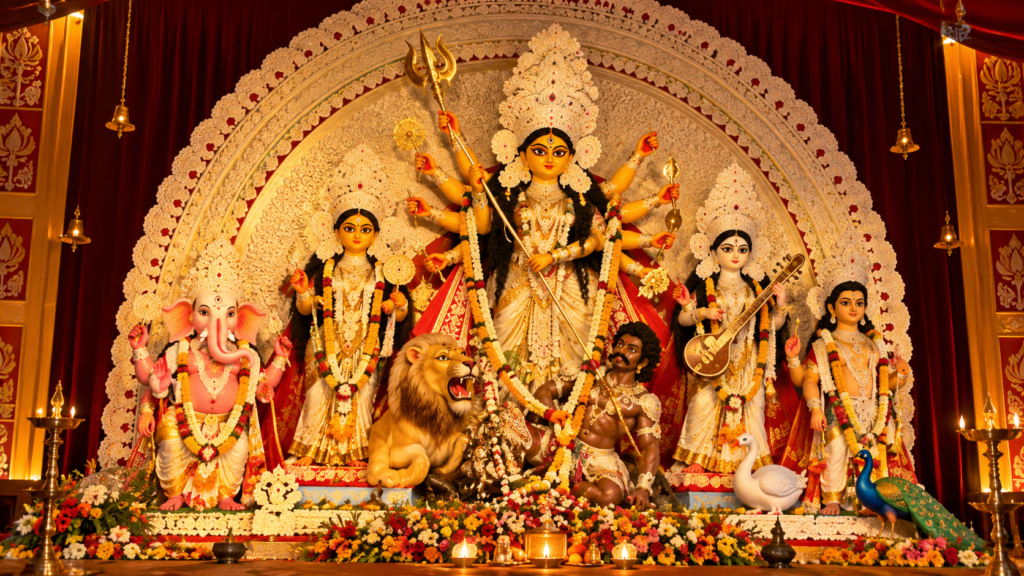
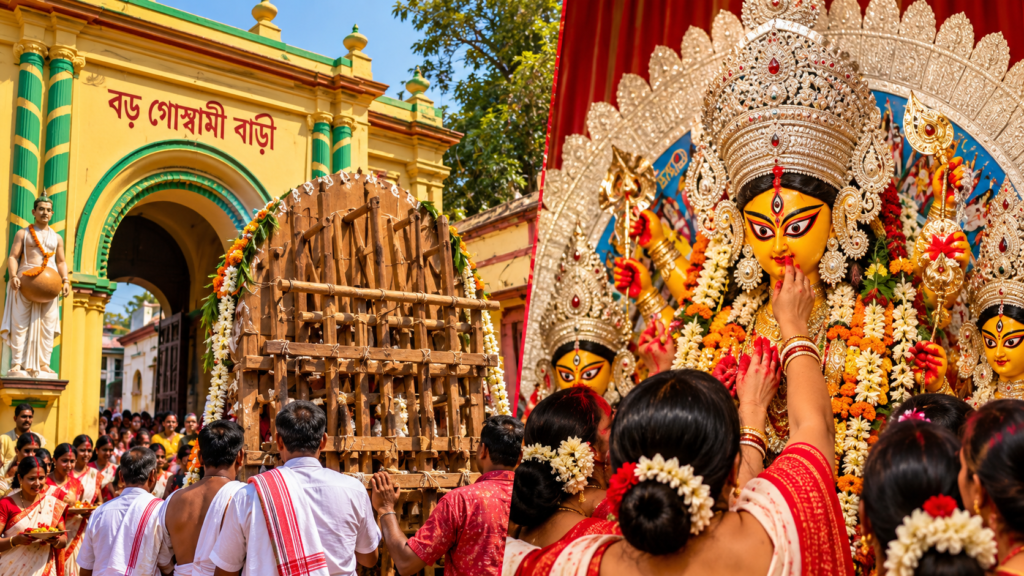
The festive spirit of Bengal found a vibrant home in the National Capital Region as Noida Kalibari celebrated its 44th Durga Puja with a tribute to traditional village life.
Situated in Sector 26, the Kalibari transformed into a cultural gathering place for Bengali families and other residents of Delhi NCR during the celebrations.
Organised by the Noida Bengali Cultural Association (NBCA), the festival combined religious traditions with artistic craftsmanship, community participation and cultural programmes.
This year’s celebration placed particular emphasis on the architectural and cultural heritage of rural West Bengal.
Bengal’s Village Traditions Come Alive in Noida
Rather than relying on elaborate modern structures, the organisers selected a theme inspired by traditional houses found across Bengal’s countryside.
The pandal recreated the appearance of a Bengali village hut, locally known as a kure ghor, incorporating elements associated with mud-walled homes and thatched roofs.
The design offered visitors a glimpse of rural Bengal’s architectural identity, creating an atmosphere distinct from the surrounding urban landscape.
According to the organising committee, the objective was to introduce younger generations and visitors from different cultural backgrounds to the traditions associated with Durga Puja in Bengal’s villages.
The concept reflected a growing interest in celebrating regional heritage through community festivals.
Artisans From West Bengal Helped Shape the Celebration
Craftsmanship played a central role in developing the traditional setting.
Artists and skilled workers from different parts of West Bengal were involved in preparing the pandal and its decorative elements.
Their participation brought authentic regional techniques and cultural influences to the celebration.
The organisers also adopted a traditional approach to the idol’s presentation, with the goddess adorned in the classic daaker saaj style.
For visitors familiar with Kolkata’s Durga Puja celebrations, these elements helped recreate the atmosphere associated with the festival back home.
For others, the displays served as an introduction to the artistic traditions that have shaped Bengali celebrations for generations.
Four Decades of Durga Puja in Noida
The roots of this community celebration extend back to the early 1980s.
The Noida Bengali Cultural Association was established in 1982 to promote cultural, religious and social activities among Bengali residents of the growing city.
Its first Durga Puja was organised in October 1983 at the Noida Club in Sector 27.
The association was formally registered in 1984, and the subsequent development of its Kalibari premises in Sector 26 helped establish a permanent centre for religious and community gatherings.
Over the decades, the organisation expanded its activities beyond Durga Puja to include cultural events, charitable initiatives and programmes celebrating Bengali heritage.
The 2026 festival marked the association’s 44th Durga Puja celebration.
Community Bhog Remains a Major Attraction
Food has always played an important role in bringing people together during Durga Puja.
At Noida Kalibari, the distribution of traditional bhog is a significant part of the celebration.
Devotees and visitors gather to receive the festive meal, reinforcing the spirit of sharing and community participation.
The tradition also helps connect younger generations with customs followed in Bengali households and community pujas.
Alongside religious offerings, food stalls featuring Bengali flavours add to the festive environment.
The celebration welcomes people from different communities, making it a gathering that extends well beyond the Bengali diaspora.
Music and Cultural Programmes Enrich the Festivities
The Durga Puja experience at Noida Kalibari is not limited to religious rituals.
Cultural performances, music and other community activities form an important part of the annual festivities.
The programmes provide opportunities for children, students and adults to participate in the celebrations, encouraging cultural exchange across generations.
For many Bengali families living in Delhi NCR, the festival also serves as an annual reunion.
Friends and relatives who may otherwise struggle to meet during the working year come together for several days of celebration.
These interactions help preserve the strong social traditions associated with community Durga Puja celebrations in Bengal.
Volunteers Form the Backbone of the Festival
Organising a major public celebration requires considerable preparation and coordination.
From managing visitors and distributing bhog to supporting cultural programmes and maintaining orderly movement inside the venue, volunteers play an essential role.
Community participation has helped sustain the festival through decades of urban growth and changing demographics.
The commitment of residents, association members and participating families remains a defining feature of the celebration.
Their collective efforts allow the festival to maintain its traditional character while welcoming an expanding audience.
Why Durga Puja Matters to Bengalis Living Away From Home
For Bengali communities living outside West Bengal, Durga Puja offers a connection to home that extends beyond religious observance.
The festival brings together familiar customs, regional art, music, food and social traditions.
It also provides an opportunity to introduce children growing up outside Bengal to the cultural practices of earlier generations.
Noida Kalibari’s village-themed pandal reflected this cultural purpose by highlighting the simplicity and artistic heritage of rural Bengali life.
The celebrations demonstrated how regional traditions can continue to thrive in cities far from their geographical origins.
Keeping the Spirit of Kolkata Alive
Delhi NCR hosts several well-known Durga Puja celebrations, including those organised by Bengali community associations in Noida and Greater Noida.
Each festival has its own identity, but all share the common purpose of celebrating Durga Puja while strengthening community relationships.
For the Noida Bengali Cultural Association, its 44th celebration represented another milestone in a journey that began more than four decades ago.
The rural Bengal-inspired setting, traditional idol decoration and cultural gatherings offered visitors an experience rooted in Bengali heritage.
As another festive season concluded, the celebrations reinforced a familiar message: distance from Bengal does not diminish the emotional and cultural significance of Durga Puja for those who continue to celebrate it elsewhere.

Trending Now
You May Also Like
Leave a Reply
Your email address will not be published. Required fields are marked *


Sharp daily reads on culture, style, wellness, travel, and the stories shaping modern life.
Recent Posts
Popular Posts